
Following the decision to create a tiny forest in the form of a wildlife hedge, a small area of 2 square metres was identified for planting.
Planting Begins!
Two old woody non-native (and invasive) cotoneasters were dug out and removed. These were replaced with native elder, holly, guelder rose, and hazel. Elder is fast growing and would soon create the density lost by the removal of the mature cotoneaster.
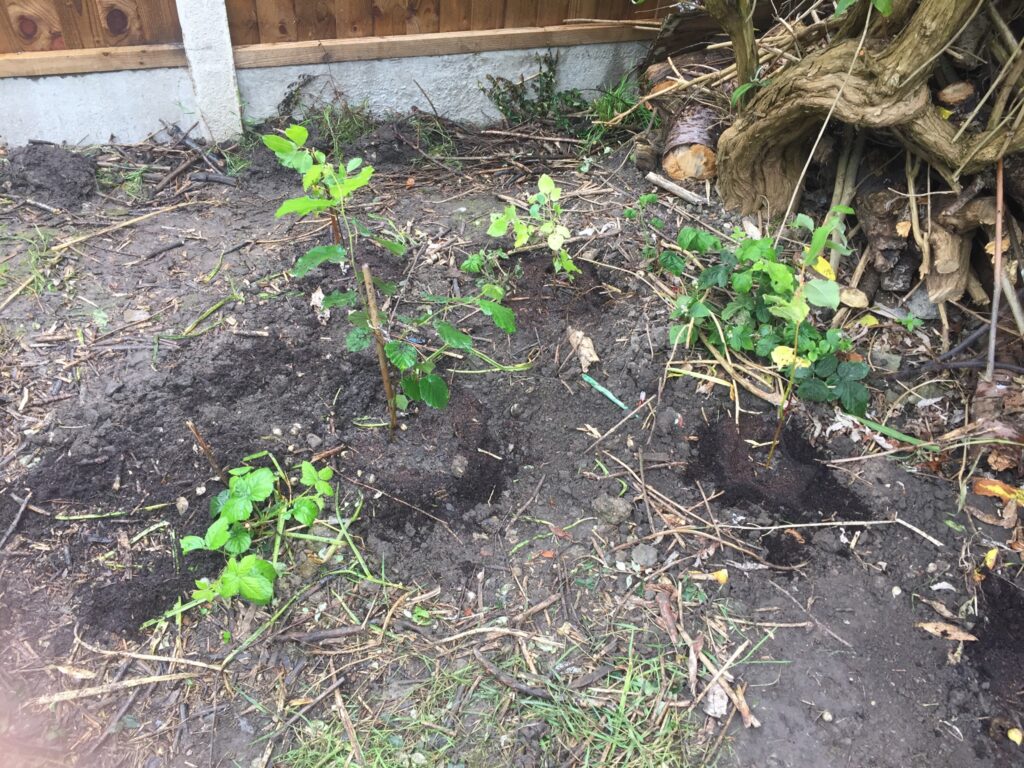
Because the ground couldn’t be dug out and cleared completely, due to pre-existing native bluebell bulbs, it was important to manage weeds to give the new trees the best chance. Woodchips were spread all around the area to keep down the growth of weeds.
A Woodland Walk
However, this part of the garden also bordered directly onto a shared fence with a neighbour’s garden.
This could lead to problems in the future if the maturing trees blocked access to the fence for maintenance, or worse, started to overgrow into the neighbour’s garden blocking their light and causing problems for them from overhanging trees.
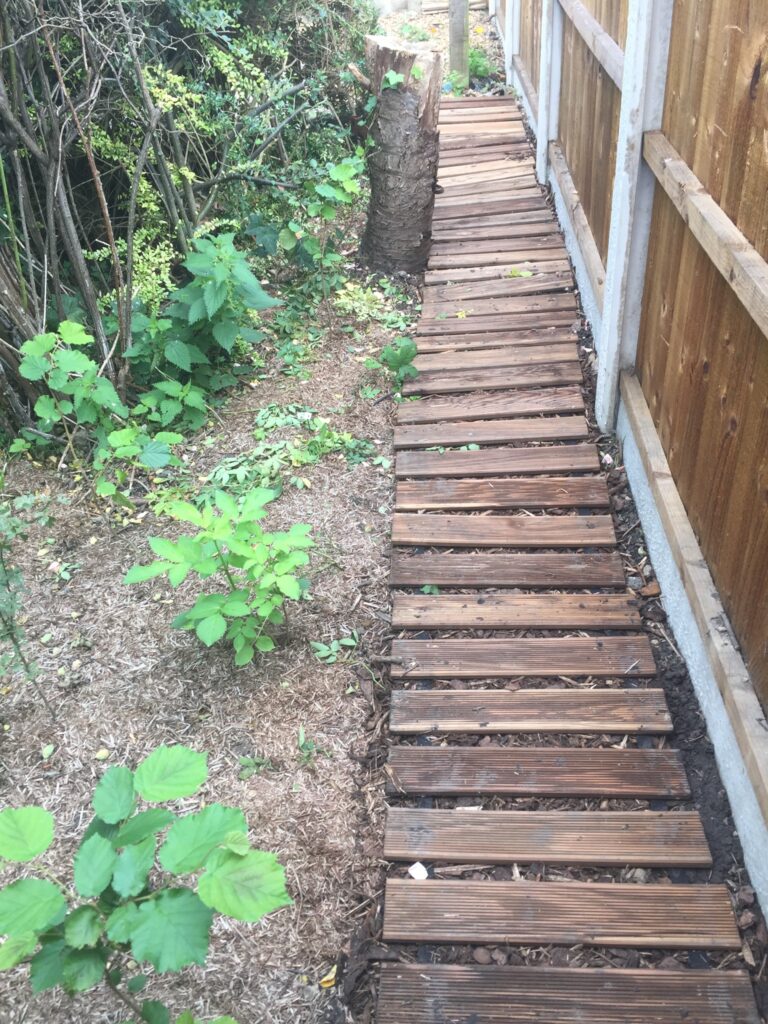
So a woodland walk was planned, separating the wildlife hedge from the shared fence, and allowing access to both sides of the hedge for trimming and maintenance of the trees and shrubs

There were lots of old paving stones in various parts of the garden that were remnants of an earlier path. These were collected and bedded in to form a path running in front of the adjoining fence.
Next to create a more woodland feel, these were covered with a layer of woodchips and then a pre-treated larch wood track path was laid on top.

Leave a Reply