
Wildlife gardens are no longer a luxury. They are an important part of our modern ecosystem, providing essential habitats for many forms of wildlife.
Evidence suggests that UK bees are increasingly dependent on urban gardens as a result of declining habitats and the adverse effects of pesticides in rural areas. This trend highlights the importance of urban spaces in supporting bee conservation efforts.
Recent studies indicate that over 50% of UK gardens are now covered in paving or artificial grass, significantly reducing green space and its benefits for biodiversity and climate resilience. The Royal Horticultural Society reports that 55% of front gardens and 36% of back gardens are fully paved over, highlighting a concerning trend in garden conversion.
What Would Mother Nature Do?
Paying close attention to the local habitat, and what the ‘wind’ blows in, it was decided to allow Mother Nature to continue take the lead (she does anyway!) and support a natural repopulating of native species.
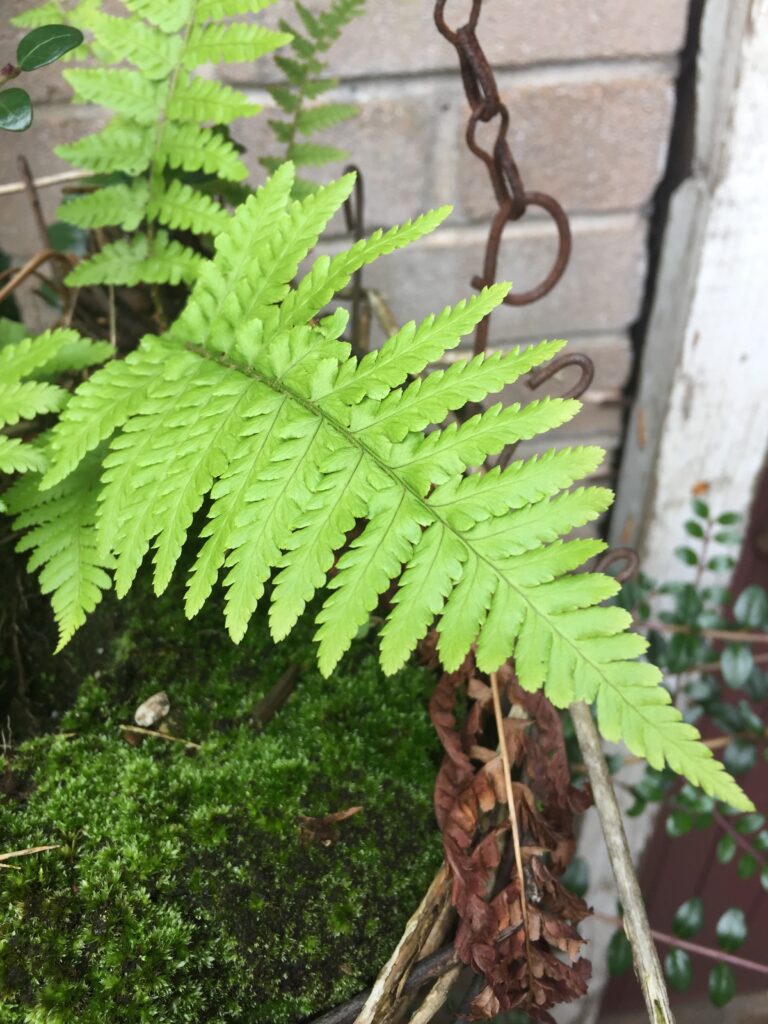
For example in the image above, local ferns and moss naturally started growing in an old hanging basket once a flower arrangement had died.
We can trust Mother Nature to know how to regenerate a habitat. We just need to support her by identifying and removing non-native plants that have appeared, sometimes as seeds blown on the wind or carried in bird droppings, and identifying and encouraging native plants to thrive.
This diary tracks the story of how an old, established, urban garden is being lovingly recovered as a wildlife habitat by encouraging native plants and slowly identifying and removing non-native ones. Read on…